
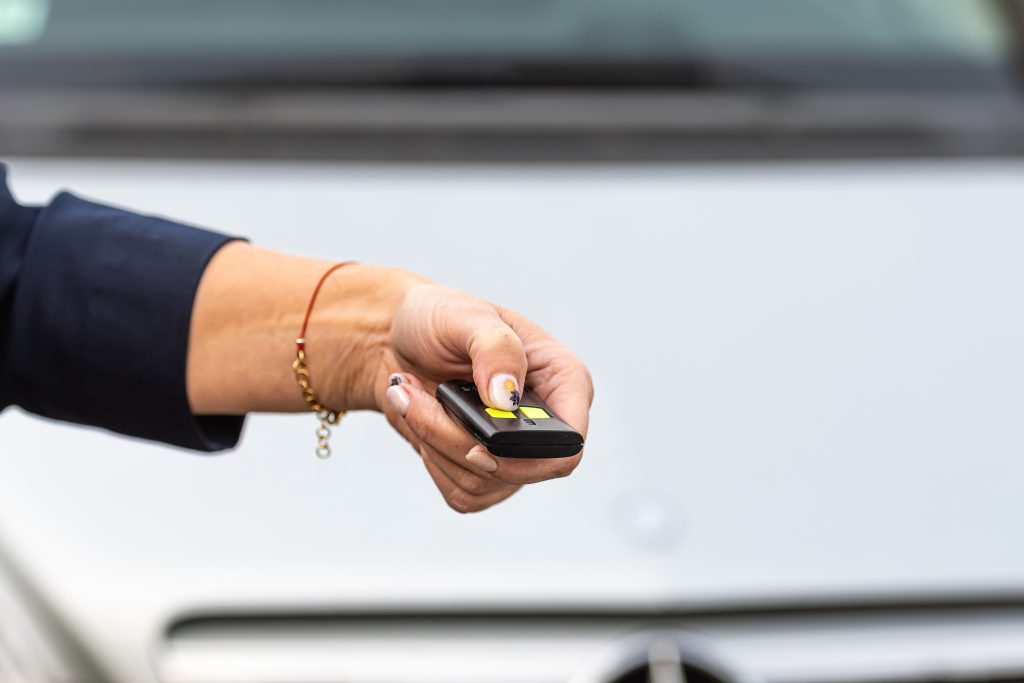
You’re ready to leave the house, garage door remote in hand, and press the button. Nothing. Not a sound. Not a single inch of movement from your garage door. At that moment, it feels like your whole day hits pause. But here’s the good news: this is a common issue, and you can often solve it faster than you think without reaching for the phone right away.
Start With the Basics: Replace the Batteries
The first thing you should check is the battery. It might seem too simple, but dead or dying batteries are the number one reason a remote stops working. Even if the light on the remote still turns on, the battery might not have enough juice left to complete the signal to the opener.
Replace the battery with a fresh one, ensuring it’s the correct size and orientation, and try again. If your remote starts working again, you’ve found your culprit. And if not, don’t worry. You’ve eliminated one possibility, and now it’s time to dig a little deeper.
Get a Little Closer and Try Again
Modern garage door remotes have a solid range, but they’re not built to work across the street or through reinforced concrete walls. If you’re pressing the button from too far away, or if you’ve got something in your vehicle that emits a strong signal, like a Bluetooth system, GPS device, or even an LED light bulb, it could block or distort the remote’s frequency.
Step closer to the garage and press the button again. Try turning off any nearby electronics just to rule out interference. This is especially helpful if the remote works intermittently or only when you’re inside the garage.
Check the Wall Console for Lock Mode
Most garage door openers have a wall-mounted control panel inside the garage. On many models, there’s a “lock” button or “vacation” setting that disables the remotes for security reasons. If someone accidentally activates that mode while cleaning, pressing buttons at random, or during a power surge, your remote won’t work, even if everything else is functioning properly.
Look for a blinking or steady light on the wall console. If it’s active, press and hold the lock button until the light goes off. That resets the system to normal operation. Now, test your remote again.
Is the opener getting power?
If your remote and the wall switch both fail to activate the door, the issue could be electrical. First, make sure your garage door opener is plugged into a working outlet. Sounds obvious, but cords do get knocked loose. If the opener is plugged in but shows no signs of life, with no lights or response, check your circuit breaker or GFCI outlet.
A tripped breaker can shut off power to the opener without you realizing it. Reset the breaker or press the GFCI reset button, then see if your system starts responding. If everything comes back to life, you’re back in business.
Try Reprogramming the Remote
If your garage door opener has power, the batteries are new, and the remote is still not responding, the next step is to reprogram it. This is easier than most people think. All you need is access to the opener itself.
Look for the “learn” or “program” button on the back or side of your opener unit, typically near the antenna wire. Press the button, but don’t hold it. Then, within 30 seconds, press the button on your remote. If the opener light blinks or clicks, the remote has been successfully paired.
Now, step back and test the remote. A successful reprogram means your opener recognizes the remote’s signal again, and the problem is solved.
Examine the Remote for Damage
Still, having trouble? Take a good look at the remote. Has it been dropped recently? Exposed to moisture? Even minor damage to the circuit board inside can cause a complete signal failure. If you have a second remote or keypad, try using that instead. If the second remote works, it’s clear your original remote is the problem.
You can also try using the remote from another garage to test it, assuming it’s compatible. If nothing works, it might be time for a replacement. New universal remotes are affordable and easy to pair with most openers.
Internal Opener Issues
Sometimes, the issue is hiding inside the opener itself. A damaged receiver board or logic board can cause the unit to stop responding to all remotes, even newly programmed ones. If your wall switch still works but the remotes don’t, and you’ve already ruled out interference, battery, and range issues, then it’s probably time to bring in a technician.
This is where experience counts. At Nofziger, we know garage door openers inside and out. Our team can run diagnostics on the opener, test signal reception, and repair or replace faulty boards as needed, all without turning it into a guessing game.
When DIY Isn’t Enough
While some garage door remote problems have quick and simple solutions, others involve complex components that require professional attention. If your opener is older, hasn’t been serviced in years, or exhibits other signs of wear, such as noisy operation, delayed response, or inconsistent performance, this may be the perfect time for a thorough inspection. Nofziger technicians are trained to spot early signs of bigger issues, saving you time and frustration later. We make sure everything from the remote to the motor works like it should.
Prevent It From Happening Again
Want to avoid this situation in the future? Keep spare batteries in the house. Check your opener’s settings every few months. Schedule seasonal maintenance to keep your opener in peak condition. Be cautious with how remotes are stored; don’t toss them into the trunk or glove box, where they can get jostled or damaged. With the right habits and a little help from the pros, your garage door can be one of the most reliable parts of your home.
Call Nofziger When It Counts
When your garage door remote stops working and the fixes aren’t obvious, don’t waste time guessing. Nofziger is here to help you restore convenience, security, and peace of mind. We’ve earned our reputation for prompt, professional service that keeps Ohio homes moving.
Call Nofziger Today!
Need garage door repairs? Contact us today for expert assistance.